
AI Mastering vs Human Mastering: What Artists Need to Know Before Releasing Music
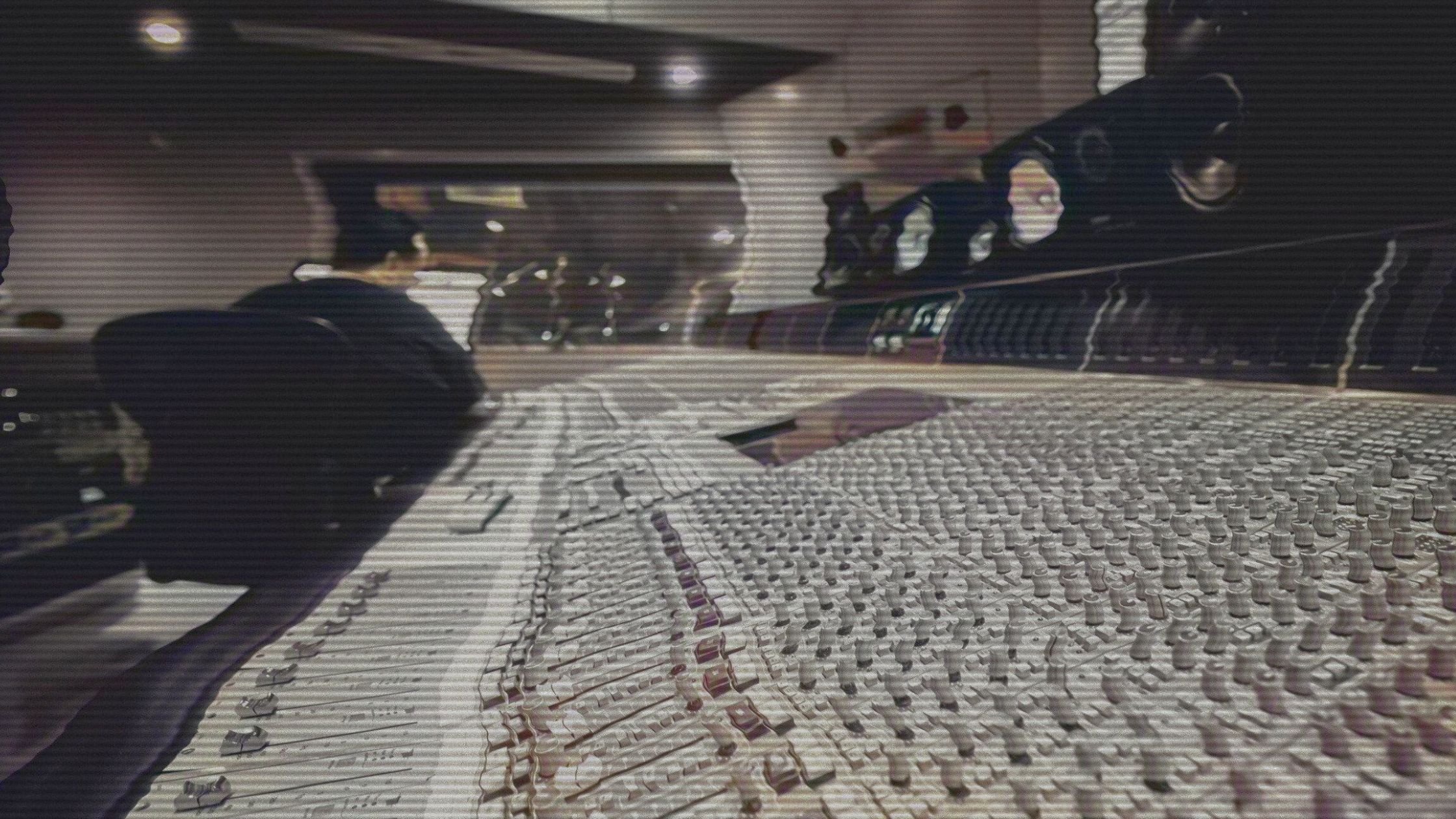
“Letting an automated system determine a final master without wider context often overlooks the very qualities that make music engaging over repeated listens.”
The rise of AI mastering tools has changed how music is finished, distributed, and perceived, particularly for independent artists working without access to professional studios or engineers. Services like LANDR, iZotope Ozone’s Master Assistant, and BandLab’s mastering tools promise speed, consistency, and accessibility, often delivering results that are technically acceptable within minutes. For many artists, especially those releasing demos, singles, or early work, that convenience can feel revolutionary.
At the same time, there is growing confusion around what mastering actually does, what AI mastering can realistically achieve, and where its limitations become audible rather than theoretical. Loudness targets can be met, tonal balance can be approximated, and files can be delivered that comply with platform specifications, but those outcomes are not the same as understanding musical intent, emotional pacing, or the narrative arc of a record.
This piece is not written to dismiss AI mastering outright. Used carefully, it can be genuinely helpful, particularly as a rough reference or pre-master. However, letting an automated system determine a final master without wider context often overlooks the very qualities that make music engaging over repeated listens. Mastering sits at the intersection of technical control and musical judgement, and while the former scales well with algorithms, the latter still relies on human listening.
Why AI Mastering Exists, and Why It Often Works
AI mastering tools exist because they solve a real problem. Most artists are not mastering engineers, and many mixes arrive at the finishing stage with predictable issues: uneven tonal balance, excessive low-end buildup, harsh upper mids, or dynamics that are inconsistent across sections. These problems can often be addressed with corrective EQ, broadband compression, and limiting applied within genre-specific loudness ranges.

AI systems excel at this type of pattern recognition because they rely on measurable attributes that can be analysed at scale. Spectral balance, crest factor, integrated LUFS, stereo correlation, and transient density are all quantifiable, and with enough training data, an algorithm can make reasonable decisions that improve an average mix. This is why AI mastering frequently sounds “better” than an untreated mix, particularly when the reference point is a raw bounce exported directly from a DAW.
For artists who need something loud, clean, and technically compliant, these tools can feel like a shortcut that removes friction from the release process. Even companies developing these systems position them this way, often describing AI mastering as a fast solution rather than a creative authority, as outlined in LANDR’s own comparison of AI mastering vs human mastering and iZotope’s discussion of AI in audio production.
Where AI Mastering Starts to Break Down
AI mastering systems rely heavily on measurement because that is what scales, while judgement does not. This reliance becomes a limitation once music moves beyond generalised balance issues and into decisions that are contextual, emotional, or structural.
Music is not static across its duration. Verses, choruses, bridges, breakdowns, and outros often serve different narrative functions, and the way energy is distributed across these sections matters just as much as overall loudness. AI mastering systems do not understand why a chorus should feel larger than a verse, because they respond to signal characteristics rather than intent, tension, or release.
This becomes especially apparent in genres where contrast is central to the listening experience. Progressive metal, post-rock, jazz, and orchestral music rely on dynamic shifts that are meant to feel dramatic rather than uniform. Flattening these contrasts in pursuit of consistent loudness can make a track technically impressive while simultaneously reducing its emotional impact.
Loudness, Fatigue, and the Cost of Uniformity
Modern mastering culture has been shaped heavily by loudness competition, and while streaming normalisation has reduced some of that pressure, listener expectations have not disappeared. Loud masters still feel subjectively exciting, particularly in dense genres like metal or pop, but loudness achieved without restraint often leads to fatigue.
In a recent progressive metal project, the goal was not simply to sound loud, but to maximise impact across sectional transitions so that listeners could physically feel the shift from one part of the song to another. While many modern metal releases are compressed heavily into the single digit LUFS range, doing so here would have flattened the very moments that gave the music its character.
Instead of relying on aggressive limiting, we focused on clipping transient peaks to control errant spikes while preserving the body and envelope of the signal. This allowed us to reach competitive loudness with approximately –0.4 dB of limiter gain reduction, leaving headroom for sections to breathe and hit harder when they needed to. There is still room to compress further for listener comfort, but the music remains glued together without feeling suffocated.
This type of decision cannot be derived from a loudness target alone, because it requires an understanding of how musical tension operates over time. I’ll begin by talking about a few mastering concepts and processes that illustrate this.
Clipping Versus Limiting, and Why It Matters
Clipping and limiting are often discussed interchangeably, but they behave very differently, particularly in how they affect transients and perceived punch. A limiter works by dynamically reducing gain once a threshold is exceeded, which can smooth peaks but also reshape transients if pushed aggressively.
Clipping, when used carefully, removes the very top of transient peaks without invoking time-based gain reduction, allowing the rest of the waveform to remain intact. iZotope’s discussion on clipping for loudness outlines why this can preserve impact more effectively than limiting alone.
AI mastering systems typically favour limiting because it is predictable, measurable, and safer to automate. Human mastering engineers may choose clipping precisely because it allows loudness to increase without sacrificing the transient energy that makes drums feel aggressive or guitars feel immediate.
Mid–Side EQ as a Musical Tool
Mid–side EQ is often treated as an advanced technique, but at its core it is simply a way of addressing spatial balance in a stereo signal. The mid channel typically contains elements like vocals, kick, bass, and snare, while the side channel carries width, ambience, and harmonic density (like keyboards, guitars).
Using mid–side processing during mastering allows subtle adjustments that can clarify the centre without collapsing width, or enhance sides without destabilising the mix. This might involve gently lifting presence in the mid to bring a vocal forward, or tightening low frequencies on the sides to maintain mono compatibility.
AI mastering tools can apply mid–side EQ reactively, but they lack the ability to interpret why spatial changes matter in a given musical context. A human engineer can recognise when a chorus feels emotionally narrow or when a dense arrangement benefits from redistributing spatial energy, decisions that are immediately audible but difficult to quantify.
Phase Rotation, Symmetry, and Transient Control
Phase rotation plays an important role in controlling waveform asymmetry and improving headroom without audible compression. Many signals, particularly kick drums and bass-heavy material, produce asymmetrical waveforms that limit how loud a track can be pushed before distortion occurs.
By rotating phase to centre energy more evenly around the zero line, transient peaks can be managed more efficiently, allowing for cleaner clipping and limiting downstream. Your can read more in a discussion on phase rotation in this Sound On Sound thread. It’s a neat technique commonly applied in high-end mastering workflows, though it may feel overly pedantic and unmusical in nature.
AI mastering systems rarely address phase rotation explicitly, partly because its benefits are context-dependent and difficult to generalise safely across all material.
Measurement vs. Judgement in Mastering
Meters matter, and I use them constantly, but they describe outcomes rather than intent. LUFS readings, dynamic range meters, and phase correlation tools provide valuable information, yet they do not tell you whether a decision serves the music.
As one of my mentors once put it, the role of the mastering engineer is partly archival, preserving information rather than destroying it in pursuit of numbers. Measurements help identify problems that ears may miss, particularly in areas like phase coherency or long-term loudness trends, but judgement determines how much intervention is appropriate.
AI mastering leans heavily toward measurement because that is where consistency lives. Human mastering balances measurement with interpretation, knowing when to push harder and when to hold back.
Where AI Mastering Fits in a Real Workflow
I think AI mastering can be genuinely useful as a reference, a pre-master, or a way for artists to quickly hear how their mix might respond to loudness processing. It can reveal balance issues, highlight harshness, or provide a loud version for demos and previews.
Where it struggles is in final delivery, particularly for releases that aim to stand out artistically rather than simply conform to platform norms. Albums, EPs, and genre-specific releases benefit from continuity, narrative flow, and decisions that extend beyond a single track.
Letting AI determine a final master removes that layer of intention, and while the result may be technically acceptable, it often lacks the depth that rewards repeated listening.
Why Skilled Ears Still Matter
Mastering is not simply about making music louder or clearer. It is about making decisions that respect the mix, the music, and the listener. Those decisions are shaped by experience, references, taste, and dialogue with artists, all of which sit outside the reach of automation.
AI tools will continue to improve, and they will likely remain part of modern workflows, but they function best as assistants rather than arbiters. Music deserves the same level of intention at the mastering stage as it does during writing, production, and mixing, especially when the goal is not just to release something, but to make it last.
If there is one takeaway here, it is that mastering is less about hitting targets and more about making choices. Tools can help, references can guide, and measurements can inform, but ultimately human agency is still needed to decide what matters most in the music and what can be left untouched.
About the author
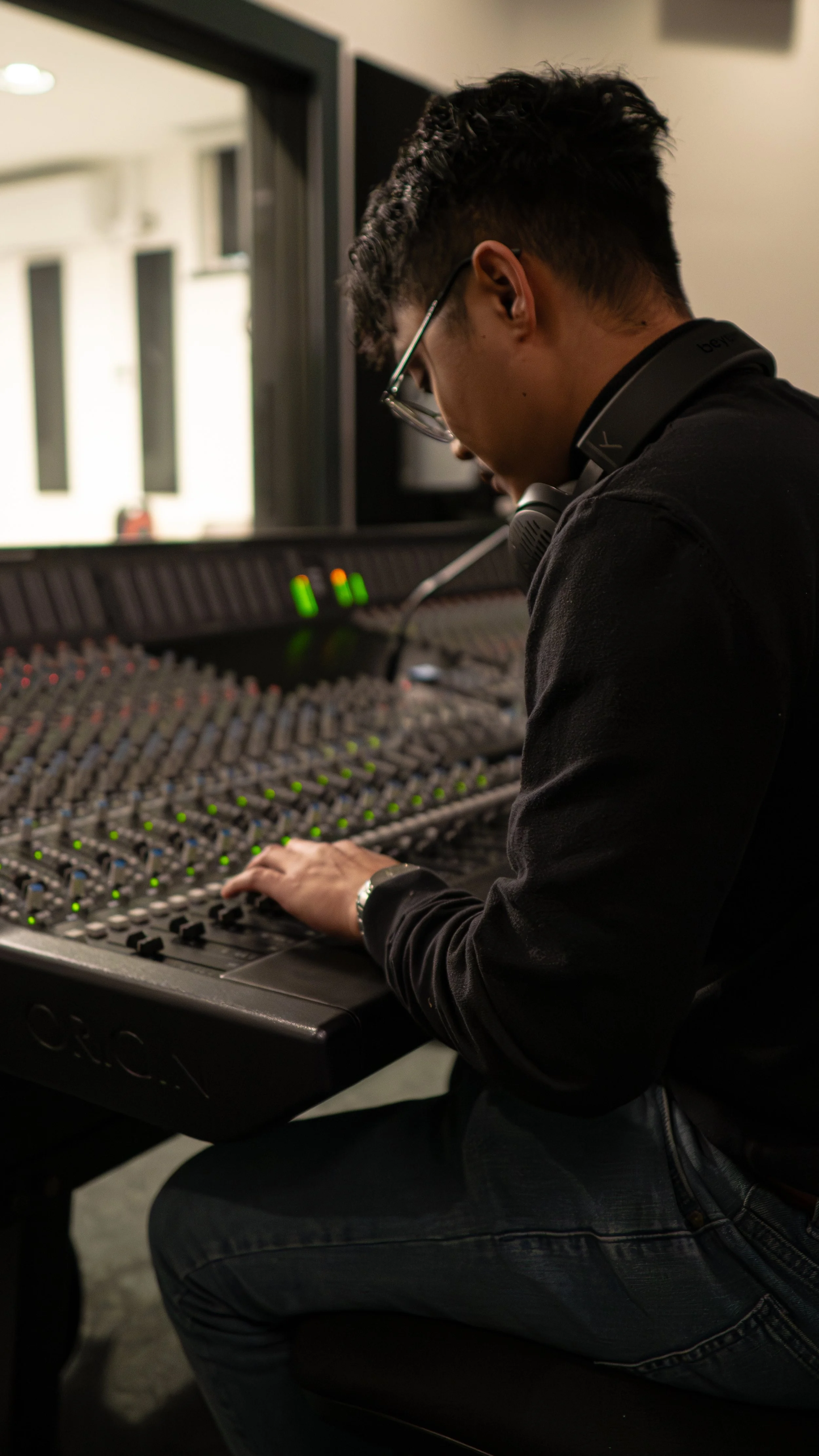
Dzafran is the founder and engineer behind Monsoon Audio Works, an online mixing, mastering, and post-production studio. He began his audio journey in Plymouth, UK, learning from local engineers and educators connected to studios such as Trident and Abbey Road. He now operates from his home base in Selangor, Malaysia, working with clients locally and abroad.
